
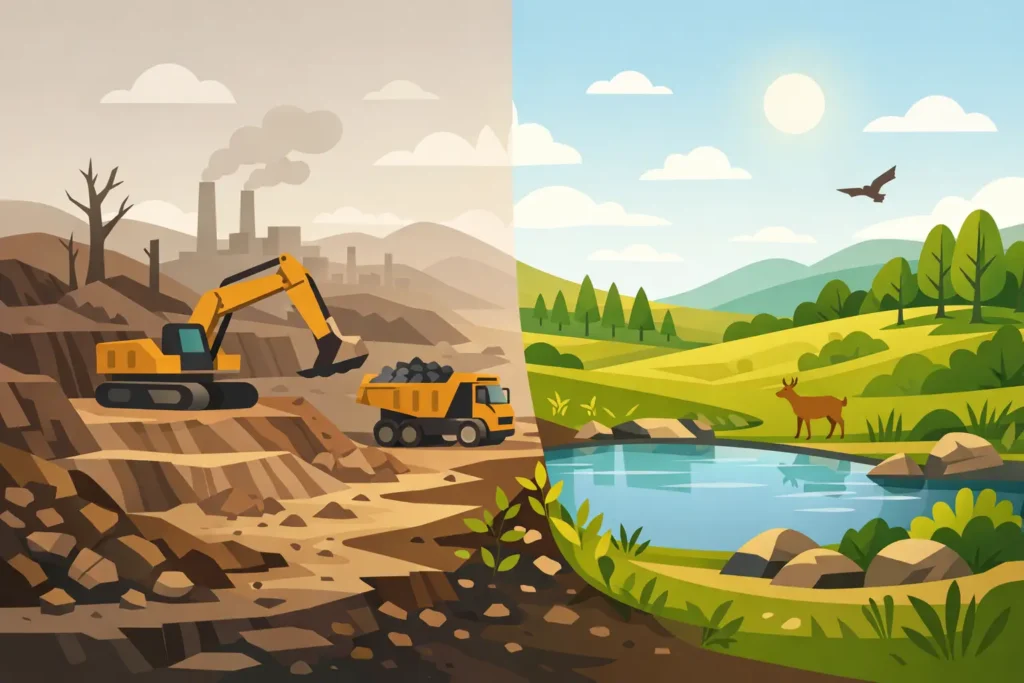
A reclaimed site should do more than look green for one season. It needs to hold soil in place, establish the right plant community, and keep performing after the first flush of growth is gone. That is the real answer behind the question, how does reclamation work: it is a planned process of rebuilding land function after disturbance, not just spreading seed and hoping for coverage.
For project owners, contractors, municipalities, and land managers, that distinction matters. A site can germinate quickly and still fail over time if the soil profile is wrong, the seed mix does not match the setting, or weed pressure gets ahead of establishment. Good reclamation work is built around long-term land performance.
How does reclamation work in practice?
At the field level, reclamation usually starts after land has been disturbed by construction, energy development, road building, utility work, or other industrial activity. The goal is to return that land to a stable, productive, and appropriate condition based on its end use. Sometimes that means restoring native vegetation. In other cases, it means establishing a durable forage stand, a low-maintenance corridor mix, or reliable cover for erosion control.
The process is rarely identical from one site to the next. Soil texture, moisture, slope, compaction, salvage quality, and regional climate all shape the plan. A pipeline right-of-way in Alberta will not behave the same way as a roadside slope in British Columbia or a disturbed agricultural site in Saskatchewan. Reclamation works best when those local conditions drive the decisions.
Site assessment comes first
Before any seed goes out, the site needs to be understood clearly. That starts with asking practical questions. What was disturbed? How deep was the disturbance? What soil horizons were salvaged, and how were they stored? Is the site dry, saline, compacted, steep, or prone to runoff? What plant community is realistic for the area?
This stage often determines whether a reclamation plan is grounded in reality or built on assumptions. A site with poor topsoil recovery may need a very different approach than one with intact salvaged material. A south-facing slope exposed to wind and heat may require species with stronger drought tolerance and fast early root development. If drainage is uneven, seed selection and soil preparation may need to account for both wet and dry zones on the same footprint.
A proper assessment also helps avoid one of the most common mistakes in reclamation: treating all disturbed ground as if it has the same establishment potential. It does not.
Soil handling is where success is often won or lost
Most reclamation problems trace back to soil. When soil structure is damaged, horizons are mixed, or compaction is left in place, even a strong seed mix can struggle.
Good reclamation work pays close attention to soil salvage, storage, replacement, and preparation. Where topsoil and subsoil are handled separately, the restored profile has a better chance of supporting healthy root growth and microbial activity. Where the soil has been heavily trafficked, loosening compaction may be necessary before seeding. Where erosion risk is high, surface preparation needs to reduce runoff and keep seed in place.
This part of the job is not glamorous, but it is foundational. Seed can only perform as well as the seedbed allows. On many disturbed sites, the question is not simply whether plants can germinate. It is whether they can persist through dry weather, competition, and seasonal stress.
Seed selection should match the site, not the wish list
Once the soil profile and surface conditions are addressed, the next step is choosing species that fit the land and the project objective. That sounds obvious, but it is where many reclamation efforts get too generic.
A reclamation seed mix should reflect the site’s intended outcome. If the goal is native restoration, species selection should support local adaptation, biodiversity, and long-term ecological fit. If the goal is erosion control along infrastructure, the mix may need dependable establishment, root mass, and tolerance to disturbed conditions. If the land will return to forage production, persistence, productivity, and grazing suitability become more important.
There is always a trade-off between speed and long-term composition. Fast-establishing species can provide early cover and weed suppression, but if they dominate too aggressively, they may limit slower-establishing desired plants. A more diverse native mix may better reflect the target plant community, but it can require more patience and tighter management in the first years.
That is why custom mix development often makes sense. Seed selection should account for region, soil moisture, slope position, soil chemistry, reclamation goals, and expected maintenance. In Western Canada, those variables can shift quickly across short distances.
Seeding method matters more than many people expect
Even the right mix can underperform if the seed is placed poorly. The chosen seeding method should fit the site conditions, scale, and terrain.
Drill seeding often provides good seed-to-soil contact and placement depth where access and ground conditions allow it. Broadcast seeding can work well on rougher terrain or where coverage over large areas is needed, but it usually benefits from follow-up packing or surface treatment to improve establishment. Hydroseeding may be useful on steep slopes or highly erosive ground where tackifiers and mulch help hold material in place.
Timing also matters. Seeding into the wrong moisture window can reduce emergence significantly. In dry regions or exposed sites, establishing before favorable moisture conditions may improve results. In other cases, dormant seeding can be part of the plan. There is no single best timing for every reclamation project. The site and seasonal forecast both need to be considered.
Early establishment is only one phase
A green site in year one can give a false sense of completion. Reclamation is not finished when seedlings appear. Early establishment is simply the first test.
The next challenge is whether the stand can hold. That means watching plant density, species balance, weed pressure, bare ground, and erosion. Some sites need mowing, weed control, or minor touch-up seeding to help the desired stand gain ground. Others need little intervention if conditions were right from the start.
This is also where expectations need to stay realistic. Native reclamation, in particular, can take time. Some species emerge and establish slowly, even when the project is on track. A site should be evaluated against appropriate timelines and criteria, not just quick visual coverage.
Monitoring shows whether reclamation is actually working
If the goal is restored land function, then monitoring is what proves progress. That can include vegetation cover, species composition, soil stability, weed presence, and comparison to target outcomes or reference conditions.
Monitoring is useful for more than compliance. It helps teams see whether the reclamation plan matched the site or needs adjustment. If certain species consistently fail on a recurring soil type, the mix may need to change. If slope erosion is recurring, the issue may be surface preparation rather than seed quality. If weeds are persistent, timing or competition strategy may need to improve.
Over time, this feedback makes future projects stronger. It turns reclamation from a one-time installation into a better operating system for land recovery.
Why seed choice has such a large impact on results
On disturbed land, seed is not just a finishing step. It is one of the main tools for stabilizing soil, rebuilding cover, and steering the site toward its target condition.
The right species can help reduce erosion, improve root penetration, support soil biology, suppress unwanted competition, and create the foundation for longer-term succession. The wrong species, or the right species in the wrong proportion, can stall progress or create management headaches later.
That is why practical seed knowledge matters so much in reclamation work. It is not enough to know which species perform in general. You need to know which ones perform under pressure on specific soil types, under specific moisture conditions, and within the realities of construction and restoration schedules. That is where a regionally grounded supplier like Proterra Seeds can add real value by helping match blends to actual field conditions.
How does reclamation work when conditions are difficult?
Difficult sites are common, not exceptional. Salinity, drought exposure, low fertility, uneven topsoil replacement, steep grades, and repeated traffic all complicate establishment. In those settings, reclamation still works, but the margin for error gets smaller.
The response is usually not one dramatic fix. It is a series of better decisions: realistic site goals, better soil preparation, species with the right tolerance profile, and seeding methods that protect establishment. Sometimes the best plan is to phase the work or accept that plant community development will take longer. Forcing a standard approach onto a difficult site usually costs more in the long run.
The strongest reclamation programs are practical. They respect the biology of the site, the limits of the season, and the need for durable results rather than quick cosmetic cover.
Reclamation works when land is treated like a system. Soil, seed, timing, and follow-up all have to line up well enough for vegetation to establish and stay. If you start there, you are not just covering disturbed ground. You are giving it a real path back to function.