
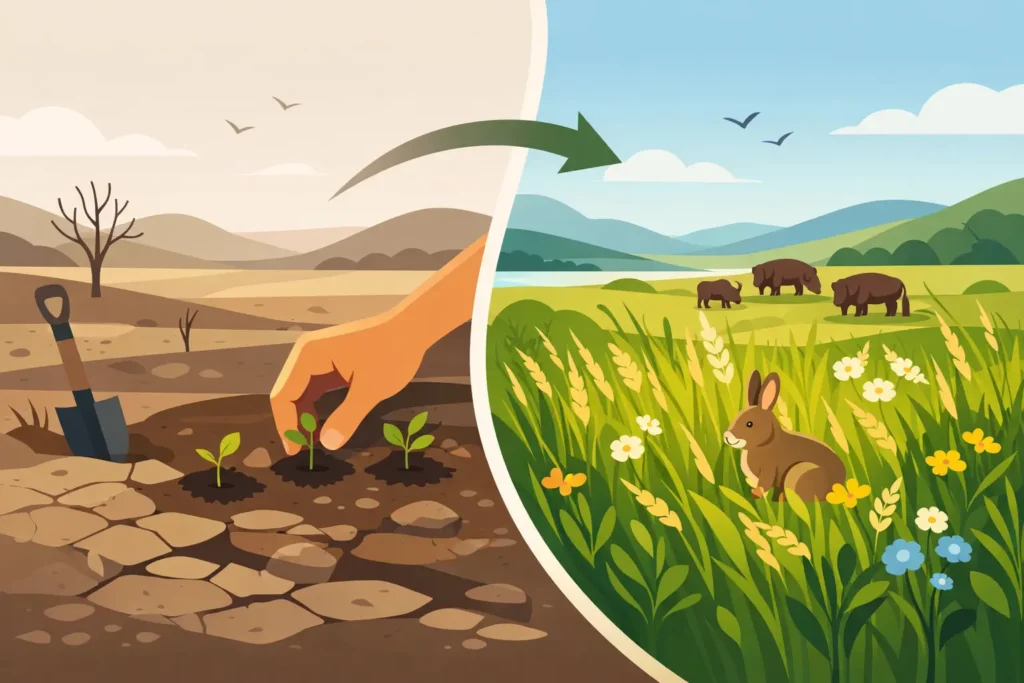
A successful grassland restoration is not measured by how green a site looks six weeks after seeding. It is measured by whether the vegetation holds soil, resists weeds, supports the intended land use, and continues improving over several growing seasons. Knowing how to restore native grasslands starts with matching the restoration plan to the site rather than applying a standard seed mix everywhere.
For land managers, contractors, municipalities, and project operators, that distinction matters. A roadside cut, well pad, solar site, pasture conversion, and disturbed construction corridor can all need native vegetation, but they do not carry the same soils, moisture patterns, weed pressure, or long-term maintenance capacity. The strongest projects are planned around those differences from the start.
Start With the Site You Have
Before selecting seed, assess the condition of the land. Restoration decisions made without a site review often create avoidable setbacks, especially where grading, compaction, topsoil handling, or invasive species are involved.
Begin by identifying soil texture, available topsoil depth, drainage, salinity concerns, slope, and areas that collect runoff. Sandy soils may dry quickly and favor drought-tolerant species. Heavy or compacted soils can shed water, restrict rooting, and make establishment uneven. Low areas may need species that can tolerate periodic moisture, while south-facing slopes may require a tougher, more drought-adapted plant community.
Also look beyond the project boundary. Nearby intact grassland, remnant native vegetation, and local ecological conditions can help define what belongs on the site. Native does not mean every species native to the continent. It means species suited to the local region, soil zone, and restoration objective.
Previous land use is equally important. A site coming out of annual cropping may have a manageable seedbed but a substantial weed seedbank. A construction site may have compacted subsoil, uneven topsoil distribution, and aggressive annual weeds ready to respond to disturbance. If the site was formerly dominated by invasive plants, controlling those plants before seeding is often more valuable than rushing the seed application.
Set a Clear Restoration Target
“Native grassland” can describe several different outcomes. A biodiversity-focused restoration may call for a diverse mix of native grasses, sedges, and wildflowers. A pipeline right-of-way may need reliable cover, erosion control, and species that allow for future access. A grazing project may prioritize durable, regionally appropriate forage while improving ecological function.
Define what success looks like before choosing species. Useful goals may include stabilizing a slope, rebuilding pollinator habitat, reducing erosion, establishing low-maintenance cover, improving habitat structure, or returning a disturbed area to a plant community similar to surrounding native land.
This step involves trade-offs. More species can improve diversity and resilience, but a highly diverse mix may establish more slowly and requires careful calibration so fast-growing species do not dominate. A simple mix can be easier to establish on difficult ground, but it may not deliver the habitat value or long-term ecological function the project requires. The right answer depends on the site, timeline, budget for follow-up work, and desired end use.
How to Restore Native Grasslands With the Right Seed Mix
Seed selection is where restoration planning becomes practical. A good native seed mix is built around functional roles, not just a long species list. It should include species that establish at different speeds, root at different depths, and respond differently to dry periods, wet cycles, and competition.
Native grasses typically provide the backbone of the stand. They help stabilize soil, build root mass, and create persistent cover. Depending on the region and conditions, the mix may also include species suited to dry uplands, moist swales, saline ground, or coarse-textured soils. Forb and wildflower components add diversity, flowering resources, and habitat value, but their percentage and species selection should reflect the site and management plan.
Seed quality and handling matter as much as the species names on a blend. Ask for clear information on purity, germination, dormant seed, and the basis used to calculate seeding rates. Native species vary widely in seed size and germination behavior. A mix should be designed and applied by pure live seed rather than judged only by bulk weight.
Regional adaptation deserves close attention. Seed sourced or selected for comparable climate and soil conditions is more likely to establish and persist than a generic blend chosen only because the species are labeled native. In variable northern climates, mixes also need to account for short establishment windows, spring moisture swings, summer heat, and the possibility of delayed emergence from some species.
A custom approach is often worthwhile when the site has specific limitations such as erosion-prone slopes, low organic matter, saline areas, restricted maintenance access, or a requirement for wildlife habitat. Proterra Seeds works with land-use objectives and regional growing conditions to help shape mixes around real field conditions rather than a one-size-fits-all formula.
Prepare the Seedbed Without Creating New Problems
Native seed needs firm contact with the soil, but seedbed preparation should not be more aggressive than necessary. Excessive cultivation can bring buried weed seed to the surface, dry out the soil, and leave loose ground vulnerable to erosion.
On many sites, the goal is a firm, level seedbed with enough surface texture to hold seed and moisture. If topsoil has been salvaged and replaced, spread it evenly and address deep compaction before seeding where practical. A roller, packer, or tracked equipment used carefully can help create a surface where a boot print is shallow rather than loose and deep.
Control established weeds before seeding whenever possible. This may involve mowing, targeted herbicide use where appropriate, repeated shallow disturbance, or a combination of methods. The best approach depends on the weed species, project restrictions, timing, and whether desirable vegetation is already present. Seeding into heavy, actively growing weed pressure usually gives the weeds the advantage.
Avoid adding high rates of fertilizer by default. Native grassland species are adapted to functioning in soils that are not heavily enriched. Excess fertility can favor annual weeds and aggressive species, creating a dense green cover that looks successful early but moves the site away from the intended plant community.
Seed at the Right Time and Depth
Timing should follow local moisture patterns, soil conditions, and the species in the mix. Dormant-season seeding can work well for some native species because winter exposure helps break dormancy and positions seed for early spring moisture. Spring seeding can also be effective when the seedbed is ready and follow-up weed control is feasible. In drier areas, late-spring or summer seeding without dependable moisture carries greater risk.
Most native grass and wildflower seed should be placed shallow. Planting too deep is one of the most common establishment failures. Small seed has limited energy reserves and may not emerge if buried beneath a heavy layer of soil. Drill seeding can provide consistent depth and soil contact, while broadcast seeding followed by packing can work well on rough terrain or where drills are impractical.
Calibration is essential, especially with blends that contain fluffy, light, or differently sized seed. Use equipment suited to the mix, check delivery rates before starting, and monitor the seed flow during the job. A mix cannot perform as intended if half the species bridge in the box or separate during application.
Manage the First Two Growing Seasons
Native grassland restoration takes patience. Some species emerge quickly, while others may remain small or appear in later seasons. A thin-looking first year does not necessarily mean failure. The real concern is whether weeds are taking over, soil is moving, or desired seedlings are absent across the site.
Early mowing is one of the most useful tools where annual weeds are tall enough to shade young native seedlings. Mow above the height of the desired plants, remove heavy clippings if they form a mat, and avoid mowing when soils are wet enough to rut. The objective is to reduce weed competition, not to make the stand look manicured.
Inspect the site regularly through the first two years. Watch for invasive species, bare patches, erosion channels, and poor establishment in distinct soil zones. Spot treatment is usually more effective and less disruptive than waiting until a problem spreads across the entire project. If reseeding is needed, identify why the first attempt failed before applying more seed. The cause may be compaction, poor seed-to-soil contact, herbicide carryover, washouts, drought, or species that did not fit the microsite.
Build Persistence Through Practical Long-Term Care
Once established, native grasslands still need management. The right method may include periodic mowing, prescribed grazing, selective weed treatment, or prescribed fire where permitted and professionally planned. Each tool changes the plant community differently, so management should support the restoration target rather than follow a fixed schedule.
For example, grazing can maintain open structure and reduce litter when stocking rate, timing, and recovery are managed carefully. Poorly timed or continuous grazing can weaken desirable plants and create openings for weeds. Mowing may help on sites where fire or grazing is not practical, but repeated mowing at the wrong time can reduce flowering and seed production.
Restoration is a long-term land investment. Give the site enough time to show what is establishing, respond early to weed pressure and erosion, and adjust management based on field observations. A native grassland built around the land it is meant to serve will do more than cover disturbed soil. It can become stable, diverse, and useful for years to come.