
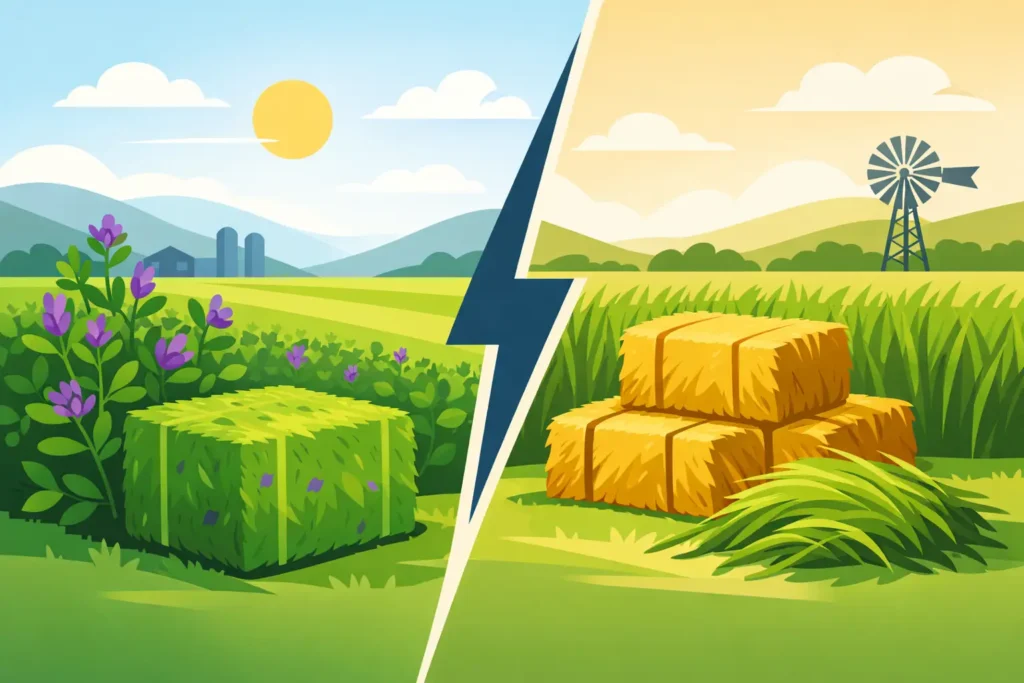
The wrong hay choice usually does not show up on day one. It shows up in body condition, feed waste, uneven performance, and a stand that never quite matches the ground it was planted on. When producers compare alfalfa versus grass hay, the real question is not which one is better in general. It is which one fits the livestock, the land, and the management plan you have in front of you.
That matters even more in Western growing conditions, where winter hardiness, moisture swings, and soil variability can quickly expose a poor fit. A high-performing forage stand is not just about yield. It is about persistence, feed quality, harvest timing, and how well the crop matches your operation year after year.
Alfalfa versus grass hay starts with the end use
Alfalfa and grass hay serve different jobs. Alfalfa is typically chosen for its protein, digestibility, and strong production potential. Grass hay is often selected for fiber, flexibility in feeding programs, and dependable stand performance across a wider range of conditions.
If you are feeding high-demand livestock such as dairy cattle, growing calves, or lactating animals, alfalfa often brings clear advantages. It can support higher nutrient requirements without as much supplementation. For beef cows in mid-gestation, horses needing more controlled energy intake, or operations focused on lower-maintenance forage systems, grass hay may be the better fit.
This is where broad statements get producers into trouble. Good forage decisions are rarely one-size-fits-all. The best hay for a broodmare is not automatically the best hay for dry cows. The best stand for irrigated acres is not always the best choice for dryland fields with variable soils.
What alfalfa does well
Alfalfa has earned its place because it can deliver a lot of nutrition per acre. When managed properly, it offers strong crude protein levels, excellent palatability, and high relative feed value. That makes it especially useful in operations where performance matters and feed quality cannot be an afterthought.
It also tends to respond well when fertility, drainage, and cutting management are dialed in. In the right field, alfalfa can be a very productive crop with multiple cut opportunities and solid tonnage. For many hay producers, that yield and nutrient density are the main reasons to build alfalfa into the forage program.
There are trade-offs. Alfalfa generally demands more management than many grass species. It does not like wet feet, it can struggle in poorly drained or highly acidic soils, and harvest timing matters a great deal. Let it go too long and quality drops. Cut too aggressively and stand persistence can suffer, especially where winter injury is a concern.
Bloat risk is another practical issue, particularly when grazing pure alfalfa stands. In a hay system, that concern is more manageable, but it still speaks to a larger point: alfalfa can be highly rewarding, but it asks more from the producer.
Where grass hay has the advantage
Grass hay often gets treated like the simpler, less valuable option. That is not always fair. In many systems, grass is exactly the right answer.
Good grass hay can provide consistent, useful feed with strong fiber levels and lower bloat risk. It is often easier to match with maintenance diets, mature beef cows, horses, and feeding programs where too much protein or energy creates its own problems. Depending on species selection, grass can also offer better adaptation to certain soils, moisture conditions, and grazing pressure.
From a management standpoint, grasses can be more forgiving. They often establish well, compete effectively once established, and fit operations that want durability and simpler harvest decisions. That does not mean all grasses perform the same. Timothy, orchardgrass, brome, fescue, and meadow species each bring different strengths in yield, regrowth, palatability, and persistence.
The downside is that grass hay usually will not match alfalfa on protein or feed value at comparable maturity. If your livestock need high-quality forage and you rely heavily on homegrown feed, grass alone may leave a nutritional gap that has to be filled elsewhere.
Nutrition is not just about protein
One reason the alfalfa versus grass hay discussion gets oversimplified is that people reduce it to a protein comparison. Protein matters, but it is not the only factor.
Fiber levels, digestibility, mineral balance, intake, and animal class all affect the right choice. Alfalfa usually has more protein and calcium. Grass hay often offers more effective fiber and can be easier to fit into rations where controlled energy is important. Horses, for example, may do very well on quality grass hay depending on workload and body condition, while high-producing dairy animals often benefit from alfalfa’s nutrient density.
Cutting stage also changes everything. Early-cut grass hay can test better than late-cut alfalfa in some categories that matter to animal performance. Poorly harvested hay of any type is still poor feed. Leaf loss, weather damage, and delayed cutting can erase the advantages you thought you had at seeding.
That is why forage testing matters. Species choice sets the ceiling, but harvest management determines a lot of what ends up in the bale.
Field conditions should help make the decision
A forage stand has to work agronomically before it works nutritionally. Soil type, drainage, fertility, salinity, and irrigation all deserve a say.
Alfalfa generally prefers well-drained soils and rewards producers who maintain fertility and pH in a suitable range. In fields with chronic wet spots, inconsistent drainage, or other stress factors, grasses may hold up better over time. On marginal ground, persistence can matter more than peak yield in a single good year.
This is especially relevant in variable Western Canadian environments, where one field can include different soil conditions across the same quarter. In those cases, a pure stand may not always be the strongest long-term solution. A carefully chosen mix can spread risk, improve adaptability, and create a forage stand that performs more consistently across the field.
That practical fit is where experience counts. At Proterra Seeds, the conversation usually starts with land use, moisture, soil conditions, and livestock goals, not with a generic claim that one forage is always better than another.
Mixed stands often make more sense than pure stands
For many producers, the best answer to alfalfa versus grass hay is both. Alfalfa-grass mixes are popular for a reason.
A well-designed mix can combine the protein and productivity of alfalfa with the structural fiber, persistence, and seasonal balance of grasses. It can also help with dry-down in the field, improve stand density, and reduce some of the management risk tied to a single-species stand. For hay production, that balance can be very practical.
The trade-off is that mixed stands require thoughtful species selection and management. If one component matures much earlier than the other, harvest timing becomes a compromise. Fertility plans also need to account for how grasses and legumes respond differently. Still, when the mix is built properly for the site and the intended use, it can be one of the most reliable forage systems available.
How to choose between alfalfa and grass hay
Start with the animals. What class of livestock are you feeding, and what are their nutrient demands through the year? Then look at the acres. Are your soils suited to alfalfa, or do field conditions point toward grasses or a blend? After that, be honest about management. Can you hit tighter harvest windows and maintain stand health, or do you need a forage system with more flexibility?
If maximum feed quality and strong production are the top priorities, alfalfa may lead. If stand resilience, feeding flexibility, and simpler management matter more, grass may be the stronger fit. If you need balance, especially across variable land or multiple livestock classes, a mix may be the most practical path.
The best forage choice is the one that performs in your field and works in your feeding program, not the one that sounds best on paper.
A hay stand should earn its place every season. When the crop matches the land and the livestock, you see it in better utilization, better persistence, and fewer surprises when weather or feed demand shifts.