
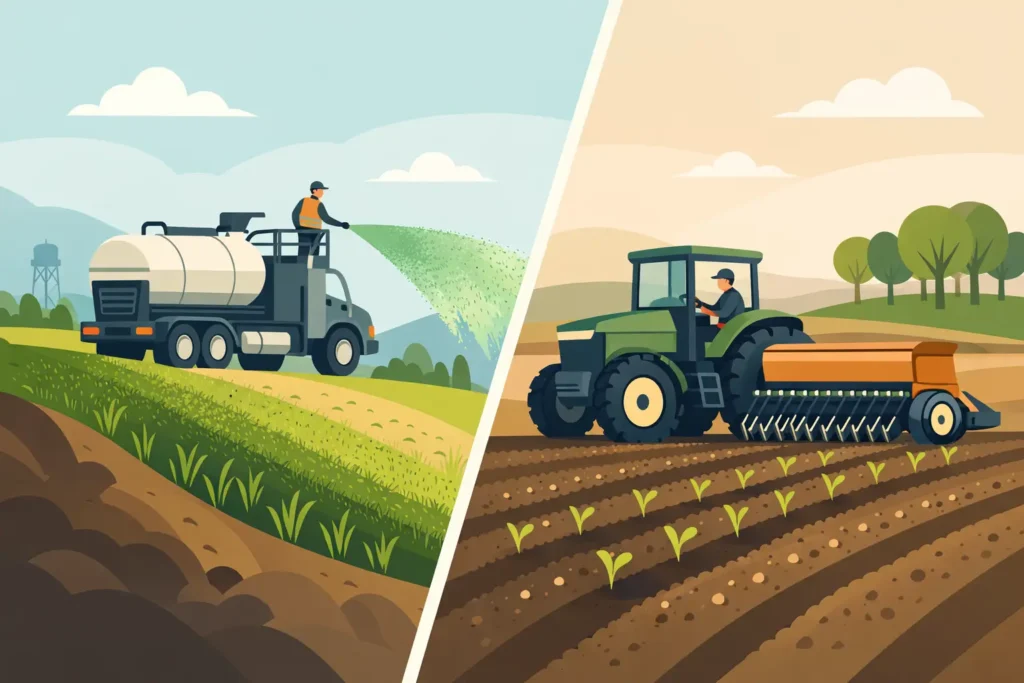
A steep roadside cut, a newly graded utility corridor, and a level pasture field may all need seed, but they should not necessarily be seeded the same way. The choice between hydroseeding versus drill seeding affects seed-to-soil contact, establishment timing, erosion protection, labor planning, and the long-term performance of the stand. The right method is usually determined by site conditions and project goals, not by a one-size-fits-all preference.
Hydroseeding versus drill seeding: the practical difference
Hydroseeding applies seed in a water-based slurry, typically along with mulch, fertilizer, tackifier, or other amendments specified for the project. The slurry is sprayed across the prepared surface, making hydroseeding especially useful where equipment access is limited or where a protective mulch layer is needed immediately after application.
Drill seeding places seed into the soil at a controlled depth using a seed drill. Press wheels or similar components firm the soil around the seed after placement. This gives the seed a more consistent environment for germination, provided the ground is reasonably smooth and firm enough for the drill to operate properly.
Neither method can compensate for poor site preparation, unsuitable species, or a lack of moisture during establishment. A well-built seed mix and a method matched to the terrain give a project a much better chance of meeting its vegetation, stabilization, or production targets.
When hydroseeding is the stronger fit
Hydroseeding earns its place on sites where a drill cannot travel safely or uniformly. Slopes, irregular ground, rocky cuts, narrow right-of-ways, and areas around infrastructure often favor a spray application. It can also cover large exposed areas efficiently when access is available for the hydroseeding equipment and water supply.
The mulch in a hydroseed slurry can provide an immediate surface benefit. It helps reduce raindrop impact, limit surface erosion, and retain some moisture near the soil surface. On a freshly disturbed slope, that protection may be as important as the seed itself. Tackifiers can help hold mulch and seed in place where wind or runoff is a concern.
Hydroseeding is also useful when a project calls for a diverse reclamation blend containing native grasses, forbs, shrubs, or species with different seed sizes and shapes. A properly designed slurry can distribute many of those components across the site. That said, seed compatibility still matters. Very light seed, fluffy seed, or seed with awns may require careful handling and agitation to maintain an even application.
There are trade-offs. Hydroseeded seed generally remains near the soil surface unless the site is tracked, rolled, or otherwise prepared to create places for seed to settle. On dry, exposed ground, surface-placed seed can face more moisture stress than seed placed at a suitable depth. Heavy rainfall immediately after application can also move mulch and seed if the slope, soil condition, or tackifier program is not properly accounted for.
Hydroseeding works best when the soil surface is roughened rather than left smooth and compacted. Small depressions, grooves, and tracking on the contour help capture water and give seed a better place to establish. On difficult slopes, this preparation can make the difference between a uniform cover and bare streaks after the first storm.
Best uses for hydroseeding
Hydroseeding is often a practical choice for reclamation slopes, roadside embankments, drainage channels, commercial landscape areas, and disturbed ground with limited access. It can also support temporary cover crops where fast surface protection is needed while permanent vegetation develops.
For restoration work, the blend should reflect the site rather than simply aim for the fastest green cover. Annual nurse crops may have a role, but they should not overwhelm slower-establishing perennial grasses or native species needed for long-term persistence and biodiversity.
When drill seeding delivers better establishment
On accessible, prepared ground, drill seeding is often the best method for dependable establishment. Its main advantage is seed placement. Seed that is placed at an appropriate depth and pressed into the soil has more reliable contact with moisture and less exposure to wind, birds, and surface drying.
This is particularly valuable for forage production, pasture renovation, cover crops, agricultural fields, and level reclamation areas where drills can travel consistently. Small-seeded species such as many grasses and legumes should be planted shallowly. Larger seed can generally tolerate slightly deeper placement. A drill allows those depths to be managed far more precisely than a surface application.
Drill seeding also makes it easier to calibrate seeding rates and maintain row-to-row consistency. That control can reduce wasted seed and help achieve a more even stand, especially on projects with defined production goals. For hay and pasture operations, uniform establishment supports more predictable forage yield and field management later on.
The limitation is access. A drill is not a good fit for very steep grades, heavily obstructed sites, loose rock, standing debris, or highly uneven terrain. Running equipment over a poorly prepared site can create inconsistent depth, bury seed too deeply, or leave portions of the ground untreated.
Drill seeding also does not automatically provide erosion protection. A drilled slope may still need mulch, erosion-control materials, or other measures after seeding. Where soil movement is the primary risk, the strength of drill placement must be weighed against the need for immediate surface cover.
Best uses for drill seeding
Drill seeding is commonly suited to hay fields, pasture establishment, annual forage crops, cover crop programs, and broad, relatively level reclamation sites. It is also a strong choice where a contractor has completed fine grading and can create a firm, even seedbed before planting.
On reclamation work, drills can be effective for grass-dominant mixes where the landform allows equipment access. Some diverse native blends can also be drilled, but species size and seed flow need to be considered. In certain cases, separate passes or a combination of application methods may produce better distribution than trying to place every species through one drill setup.
The decision comes down to the site
The fastest way to choose between methods is to assess the ground before selecting equipment. Start with slope and access. If machinery can safely operate over a firm, relatively uniform surface, drill seeding deserves serious consideration. If the terrain is steep, fragmented, or difficult to reach, hydroseeding may be the more workable option.
Next, look at the soil surface. A drill performs best in a prepared seedbed that is firm but not compacted, with enough loose soil to close around the seed. Hydroseeding benefits from a roughened surface with texture that catches slurry and slows water movement. In both cases, smooth, sealed soil is a warning sign. Seed rarely establishes well when it is sitting on hard ground with little opportunity to contact moisture.
Seed mix composition should guide the decision as well. Large, free-flowing agricultural seed usually works well through a drill. Diverse reclamation blends may include seed types that need specialized drill boxes, altered settings, or slurry application. The goal is not simply to get seed onto the site. It is to place each component where it has a fair chance to germinate and persist.
Timing and weather also matter. A hydroseeded project needs reasonable moisture after application, particularly during the first germination period. A drilled project has better moisture access at depth, but it still needs adequate soil moisture and favorable temperatures. On either type of project, seeding ahead of a prolonged dry period can lead to uneven results.
A combined approach can be the right answer
Some sites do not require an either-or decision. A contractor may drill seed on accessible benches and flatter areas, then hydroseed steep slopes, swales, tie-ins, or ground around structures. This approach can improve coverage while using each method where it performs best.
A combined strategy may also be useful when a permanent seed mix needs different placement methods. For example, drill-seeded grasses can establish a dependable base across workable ground, while hydroseeding can apply selected surface-friendly species and mulch where erosion control is needed. The plan should be built around the restoration objective, not around using a single application method everywhere.
Get the seedbed and seed mix working together
The best seeding method is only part of the establishment plan. Soil testing, weed pressure, compaction, drainage, slope aspect, and intended land use all affect the final result. A seed mix that performs on a productive pasture site may not be appropriate for a dry roadside slope, just as a reclamation blend designed for long-term diversity may not meet a forage producer’s feed goals.
Proterra Seeds helps project teams and producers match seed blends to the realities of the ground, from erosion-prone disturbed sites to productive forage acres. Whether the plan calls for hydroseeding, drill seeding, or both, the practical goal remains the same: give the right seed a properly prepared place to grow, then protect that establishment period from the risks the site presents.