
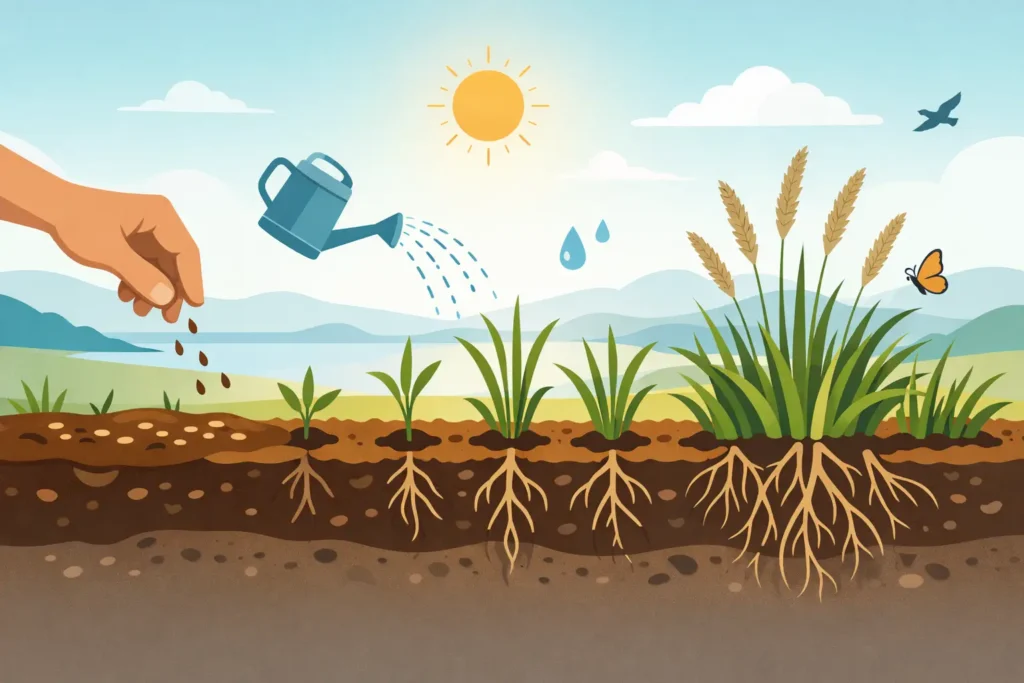
A native grass seeding can look quiet in its first season, then become one of the most durable parts of a site for years to come. That slow start is often misunderstood. Knowing how to establish native grasses means planning for long-term root development, not judging success by quick top growth in the first few weeks.
For reclamation sites, rights-of-way, commercial landscapes, pasture edges, and conservation areas, native grasses can provide erosion control, persistent cover, habitat value, and better adaptation to local weather patterns. Results depend less on simply putting seed in the ground and more on matching the seed mix, seedbed, timing, and management plan to the site.
Start With the Site, Not the Seed Mix
Native grass establishment begins with an honest assessment of the ground. A dry, coarse-textured slope needs a different approach than a heavy clay lowland, a saline industrial site, or a landscaped area with regular irrigation. The intended land use matters just as much. A mix intended to stabilize a roadside shoulder should not be designed the same way as one intended to restore a diverse native plant community.
Look closely at soil texture, compaction, drainage, slope, existing vegetation, salinity risk, and available maintenance. On disturbed ground, soil salvaging and replacement practices can have as much influence on establishment as the seed itself. Deeply compacted soil can restrict rooting and infiltration, while uneven grading can concentrate runoff and wash seed from the site.
A soil test is useful when fertility, salinity, or pH may limit establishment. Native grasses generally do not need high fertilizer inputs, particularly nitrogen. Excess nitrogen can encourage annual weeds and fast-growing species that outcompete slow-developing natives. Apply amendments only when site conditions and soil results support the decision.
Choose Species for Function and Local Conditions
The best native grass blend is not necessarily the one with the most species. It is the one with species that can perform together under the conditions you expect over the long term. A practical mix often includes grasses with different growth habits and root structures, balanced for moisture conditions and the project goal.
For a dry site, drought-tolerant species with strong fibrous root systems may be the foundation. On wetter ground, select species that tolerate periodic saturation without failing during normal dry periods. Where biodiversity restoration is the objective, native forbs may be included, but they require thoughtful seeding and weed-management planning because they can be especially sensitive during establishment.
Seed source also matters. Regionally adapted material is more likely to handle local temperature swings, moisture patterns, and growing seasons. This is particularly important across the Prairie provinces and other northern climates, where a short growing season, spring wind, and variable rainfall can challenge a new stand.
Use Pure Live Seed When Comparing Rates
Native seed lots vary in purity and germination. Seeding rates should be calculated on a pure live seed basis rather than by bulk weight alone. This provides a clearer picture of how much viable seed is being placed per acre and helps avoid underseeding or overloading the mix with a few heavier seed types.
A custom blend must also be physically compatible with the seeding equipment. Light, fluffy, awned, or chaffy seed can bridge in a conventional drill box and lead to uneven distribution. When those species are part of the mix, use equipment with a native seed box or another delivery system designed to keep seed flowing consistently.
Build a Firm, Weed-Managed Seedbed
A firm seedbed is one of the most reliable ways to improve native grass establishment. Seed should be placed into soil where it can make good contact, take up moisture, and remain at a consistent shallow depth. If a footprint sinks deeply into loose soil, the seedbed is usually too soft.
On sites with established weeds, control should begin before seeding whenever possible. Perennial weeds, aggressive annuals, and volunteer crops can take moisture, light, and space from seedlings that are still building roots. The right approach depends on the species present, the timing of the project, and any site restrictions, but the goal is consistent: reduce competition before native seedlings emerge.
Avoid excessive tillage if it brings more weed seed to the surface or leaves soil vulnerable to erosion. On some sites, a stale seedbed approach works well. Prepare the ground, allow weeds to germinate, control that flush, then seed into the firm surface. On steep or erosion-prone sites, minimize disturbance while still ensuring proper seed placement.
Seed at the Right Depth and Time
Most native grass seed should be planted shallowly, often about one-quarter to one-half inch deep depending on soil texture and species. Seed placed too deep may not emerge, especially small-seeded species with limited stored energy. Seed placed on the surface without packing can dry out quickly or move with wind and water.
A drill is usually the most consistent option for larger projects because it places seed at a controlled depth and improves soil contact. Broadcast seeding can work where terrain, surface conditions, or access prevent drilling, but it typically requires a higher seeding rate and a follow-up pass with a harrow, cultipacker, or other packing method. Good seed-to-soil contact is essential either way.
Spring seeding can be effective when soil moisture is available and weed pressure is manageable. Dormant seeding in late fall can also be a sound option, especially for species that benefit from natural winter exposure. The key is to seed late enough that germination will not occur before winter. A fall seeding that sprouts prematurely can be vulnerable to freeze injury and winterkill.
Timing is not one-size-fits-all. On dryland sites, seeding just ahead of reliable moisture may matter more than following a calendar date. On reclaimed sites with a strict construction schedule, temporary erosion-control measures may be needed while the permanent native stand develops.
Do Not Mistake a Slow Start for Failure
Native grasses often invest heavily below ground during the first year. A stand can appear thin above ground while root systems are establishing and plants are preparing for future persistence. This is normal, especially for warm-season or deep-rooted species.
The first growing season is mainly about protecting seedlings from competition and preventing erosion. Mowing may be appropriate where annual weeds are tall enough to shade the young stand. Keep the mower height high enough to avoid scalping or removing the native seedlings, and remove excessive clippings if they could smother new growth. Mowing is a weed-suppression tool, not a substitute for good pre-seeding weed control.
Herbicide options are limited once a diverse native mix is growing, because many products can damage broadleaf forbs or certain grass species. If weed control is expected to be a major challenge, plan for it before seeding and confirm that any treatment is compatible with the species in the mix and the site requirements.
Watch the Stand Through the Second Season
A more meaningful assessment usually comes in the second growing season, and sometimes the third. Check for seedling distribution, bare areas, weed pressure, erosion, and species composition. Thin patches may need spot treatment or interseeding, but avoid reacting too quickly. Some native species emerge later than others, and conditions from one season can strongly affect visible growth.
Grazing should be delayed until plants are well rooted and the stand can tolerate use. The timing depends on the species, moisture conditions, and management goal. Once established, native grass systems can be durable, but early overuse can set them back before roots and crowns are fully developed.
Plan for Establishment as a Multi-Year Job
The strongest native grass projects are built around realistic expectations. Fast cover can be useful on some sites, but a nurse crop or temporary cover should be selected carefully because it can compete for moisture and light. In many cases, the short-term benefit of rapid green cover must be weighed against the risk of suppressing slower native seedlings.
For large reclamation, infrastructure, or municipal projects, document seed lot information, seeding dates, application rates, weather conditions, and follow-up observations. That record helps identify what worked and supports better decisions if repairs are needed. It also gives project teams a practical baseline when comparing establishment across different slopes, soil zones, or construction areas.
A well-matched native grass blend, a firm seedbed, shallow and even placement, and patient first-year management will do more for long-term success than chasing quick visual results. When the site is prepared with the same care expected of the finished landscape, native grasses have the room to establish, stabilize the soil, and keep working long after the equipment has left.