
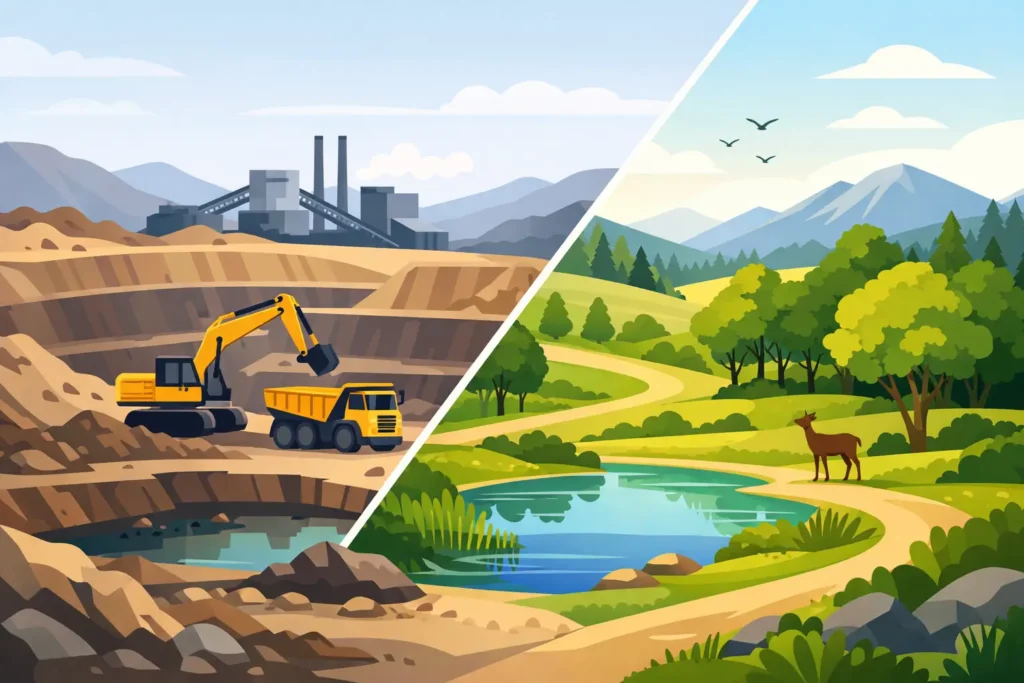
Mining leaves a footprint long after the equipment is gone. Slopes can erode, topsoil can be lost, water movement can change, and plant communities may struggle to return on their own. That is why the question what is reclamation in mining matters so much. Reclamation is the practical work of stabilizing disturbed land, rebuilding soil function, and establishing vegetation so the site can move toward a safe, productive, and sustainable post-mining condition.
For project owners, contractors, land managers, and regulators, reclamation is not a cosmetic step at the end of a job. It is a core part of responsible land use. A reclaimed mine site needs to perform over time, not just look acceptable for one season. In Western Canada and across North America, that often means dealing with challenging soils, short growing windows, weed pressure, variable moisture, and the need to match plant species to a very specific site.
What is reclamation in mining, exactly?
At its simplest, mining reclamation is the process of restoring land disturbed by mining activities so it can support an agreed future land use. That future use might be native habitat, grazing land, forestry, industrial use, wetland function, or another stable end land use approved for the site.
The key word is stable. Reclamation is not just spreading seed and hoping for green cover. It usually includes recontouring landforms, replacing or managing soil materials, controlling erosion, restoring drainage patterns, and establishing vegetation that can persist under local conditions. On some sites, it also involves addressing salinity, compaction, poor fertility, or limited organic matter.
This is where people sometimes confuse reclamation with remediation. Remediation focuses on removing, containing, or reducing contamination or other hazards. Reclamation is broader. It deals with how the land functions afterward. A site may need both, but they are not the same thing.
Why mining reclamation matters beyond compliance
Most experienced operators already know reclamation is part of the regulatory picture. But compliance is only one piece of it. Poor reclamation carries long-term operational and environmental costs.
If slopes are left unstable, erosion can move soil and sediment off site. If vegetation is poorly matched to the area, establishment may fail and require rework. If drainage is not thought through, one heavy runoff season can undo a lot of field work. On the other hand, a well-designed reclamation program helps control sediment, improve infiltration, reduce invasive pressure, and move the land toward a condition that can support the intended use for years to come.
There is also a practical business reality here. Land performance matters. Owners and contractors need seed mixes and reclamation plans that are built for real field conditions, not just paper targets. Fast cover can be useful, but quick germination alone is not enough if the stand cannot persist.
The main stages of reclamation in mining
Reclamation often starts before mining is finished. On well-managed projects, planning begins early because soil handling, stockpiling, drainage design, and closure goals all affect the final outcome.
Site assessment and end land use planning
The first step is understanding what the site needs to become. That includes reviewing soil conditions, slope position, hydrology, climate, pre-disturbance vegetation, and the target land capability after mining. A reclaimed grassland site will not be managed the same way as a forest edge, a wildlife habitat area, or a forage-focused landscape.
This is also the stage where regional knowledge matters. Species that perform well in one part of Alberta or British Columbia may not be the right fit for another location with different moisture, elevation, or soil chemistry.
Landform grading and stabilization
Before vegetation has a chance, the site itself must be stable. Reclamation crews often regrade slopes, address compaction, manage surface roughness, and shape drainage so water moves across the site in a controlled way. If this work is rushed or poorly designed, seed establishment can suffer no matter how strong the mix is.
Stability here is physical as much as biological. The land must resist erosion long enough for vegetation to take hold.
Soil replacement and soil improvement
Healthy plant establishment depends on more than having material on the ground that looks like soil. Replaced soils need enough depth, structure, and biological function to support rooting and moisture movement. On mine-disturbed sites, that can be difficult.
Some areas have stripped or stockpiled topsoil available. Others rely on subsoil, salvage materials, or amended growing media. It depends on the site. Where compaction, low organic matter, or nutrient imbalance are limiting factors, reclamation plans may include tillage, organic inputs, or fertility management to improve establishment conditions.
Revegetation
This is the stage most people picture, but it works best when the earlier steps were handled properly. Revegetation means selecting and establishing plant species suited to the site, the reclamation goals, and the expected maintenance level.
In mining reclamation, seed selection is rarely one-size-fits-all. A temporary cover crop may help with short-term erosion control, but permanent reclamation usually calls for a more durable mix. Depending on the objective, that may include native grasses, introduced grasses, legumes, shrubs, or a combination designed for soil stabilization, biodiversity, forage value, or ecological recovery.
The best seed mix is not always the most diverse one on paper. It is the one that fits the soil, moisture regime, slope, aspect, and management objective. On some sites, aggressive species can help secure quick cover. On others, they can outcompete slower-establishing species that are important for long-term ecological function. That trade-off needs to be managed carefully.
Monitoring and adaptive management
Reclamation is measured over time. Germination in the first season is only the beginning. Sites need monitoring to track plant density, species composition, weed pressure, erosion, and overall site stability.
If performance falls short, adaptive management may include reseeding, weed control, fertility adjustments, or erosion repairs. That is normal. Reclamation is field work, and field conditions do not always behave exactly as planned.
What good reclamation looks like on a mine site
A successful reclaimed site is more than green. It should hold soil in place, support the target vegetation community, handle rainfall and runoff without failing, and show progress toward the intended land use.
That does not mean every site looks natural right away. Some mine disturbances take years to develop full vegetation structure and soil function. Early reclamation success may be measured by ground cover and erosion control, while later success looks more at persistence, species balance, and land capability.
Good reclamation also reflects realism. A dry, exposed slope with low-quality growth media will not behave like a protected lowland site with better moisture. Expectations, methods, and seed choices need to match those conditions.
Common challenges in mining reclamation
The hard part of mining reclamation is that no two sites are exactly alike. Even within the same project, upper slopes, low areas, haul roads, stockpile footprints, and compacted work zones can all require different approaches.
One common challenge is poor soil structure. If roots cannot move through the profile, vegetation may establish shallowly and fail under stress. Another is erosion before vegetation has enough cover to protect the surface. Weed pressure is also a frequent issue, especially where disturbed soil gives opportunistic species an opening.
Climate adds another layer. In parts of Alberta and Saskatchewan, wind exposure, dry periods, and short establishment windows can make timing critical. In some areas of British Columbia, elevation and moisture variability can change what species will persist. That is why region-specific seed planning matters. A generic blend may produce some cover, but it may not deliver the long-term performance the site needs.
The role of seed in mining reclamation
Seed is one part of the system, but it is an important part. The right mix helps stabilize soil, establish cover, improve rooting, support pollinators or wildlife where appropriate, and move the site toward its post-mining use.
In practical terms, reclamation seed selection should answer a few basic questions. What is the soil like today? What does the site need to become? How much moisture can be counted on? Is the priority quick cover, long-term persistence, native restoration, forage function, or a combination of those goals?
For many buyers, custom blending makes more sense than relying on a standard off-the-shelf approach. Species proportions, establishment speed, persistence, and site tolerance all affect outcome. Proterra Seeds works with these kinds of questions every day because successful reclamation depends on fit, not guesswork.
Mining changes land fast. Reclamation is the steady work of helping that land function again, one stable surface, one rooted stand, and one season at a time.